

Meet the Speaker - Min-Soo Kwon
Ahead of the summit, we spoke with Min-Soo Kwon, Chief Executive Officer at Brainimmunex, to discuss the evolving neuroscience drug development landscape in South Korea and the growing need for innovation in neurodegenerative disease.
In this interview, he explores the drivers behind CNS innovation, shares Brainimmunex's novel approach to restoring microglial function through metabolic reprogramming, and highlights the importance of patient stratification, biomarker development, and collaboration in advancing next-generation neuroscience therapies.

How do you view the current state and future direction of South Korea's neuroscience drug development landscape?
CNS, and neurodegeneration in particular, has been underserved everywhere, not just here. Success rates are low and the field is far less established than oncology, so despite how well Korean biotech has done in other areas, uncertainty about returns has kept us in a follower position. If you look at the national drug development pipeline, oncology assets outnumber neuroscience assets several times over.
Meanwhile the clinical burden is arriving faster here than almost anywhere else. Korea moved from an aged society to a super-aged one in roughly seven years, where most European countries took decades. The dementia population is about to cross one million and is projected to double within two decades, and the national cost of managing it is already measured in tens of trillions of won. Therapeutic development is simply not keeping pace.
What Korea does have is strong clinical infrastructure, well organized patient cohorts through the national health system, and a regulator willing to engage with difficult modalities. Korea granted conditional approval to an autologous mesenchymal stem cell therapy for ALS, which few regulators would have done at the time. I was a co-author on publications related to that programme, and whatever one concludes about the outcome, it showed a willingness to act.
Over the next decade I expect the field to move away from broad neuroprotection and toward patient subgroups defined by mechanism. Korean companies are small enough to be specific, and specificity is what this field now demands.
What is driving the growth of CNS innovation across Korea's biopharma sector?
Three things.
First, demographic pressure that no policy can defer.
Second, the capability gap between countries is narrower in CNS than in other areas, which has opened space for groups working on alternative mechanisms. The failures of the past decade were not failures of resources. Well-funded programmes engaged their targets and still did not change the disease course, which tells you the limiting factor is the hypothesis, not the money. That lets smaller teams compete on ideas.
Third, our translational infrastructure has matured. Experience from international trials, regulatory know-how on expedited pathways, and manufacturing capability built during the oncology and biosimilar years all transfer directly to CNS. Trial authorization and ethics review here are among the fastest anywhere, which matters a great deal in a field where recruitment is slow.
I would not overstate that, though. Seoul had been the leading city in the world for clinical trials for several years and has recently lost that position to Beijing. The advantage is real but no longer secure.
What I think matters most going forward is our ability to build high-quality patient cohorts and standardize clinical data, now with AI in the mix, alongside a highly skilled medical workforce. That is where Korea can still differentiate, because patient stratification is the central problem in CNS today.
What insights are you most excited to share with attendees?
The main one is that after two decades of trying to suppress neuroinflammation, the original approach may have been wrong from the start, mostly through oversimplification.
Minocycline, verdiperstat, masitinib, the NSAIDs, the kinase inhibitors, all of them failed. Minocycline did not just fail in ALS, it accelerated progression. These drugs suppress microglia without distinguishing inflammatory activity from homeostatic function, and the cells that drive inflammation are the same cells that clear protein aggregates.
We take the opposite approach. We think aged microglia are a shared pathological factor across these diseases, and we target the lipid droplets that accumulate in them. By metabolically reprogramming those droplets we get several effects at once, including normalized ATP production, control of TDP-43 aggregation, and restored nuclear DNA repair.
The broader point is that restoring function and suppressing activity are different goals, and the literature has often conflated them. I am looking forward to presenting the evidence and the story behind it.
What are you most looking forward to learning from your peers?
Mostly what has actually worked for people, and what has not. The parts that never make it into a published paper are usually the most useful. I am also interested in how large pharmaceutical companies are setting their priorities right now, because that tells a company like ours a lot about what we need to have in hand.
Beyond that I am carrying two specific questions.
One is the gap between target engagement and clinical benefit. The TREM2 program hit their target, produced exactly the pharmacodynamic response everyone expected, and the disease course still did not change. Our program rests on a metabolic mechanism, so I want to know which preclinical readouts other groups now treat as predictive, and which ones they have quietly learned to discount.
The other is how to measure microglial state in a living patient. We can see lipid droplet burden and metabolic recovery in patient-derived cells but turning that into something measurable inside a trial is still unsolved for us. That is probably where I will learn the most from people whose work looks nothing like ours.
And of course, the meeting is a chance to talk with companies here and abroad about where collaboration makes sense, which for us means finding groups in adjacent areas and being clear about where we differ.
Explore the Agenda
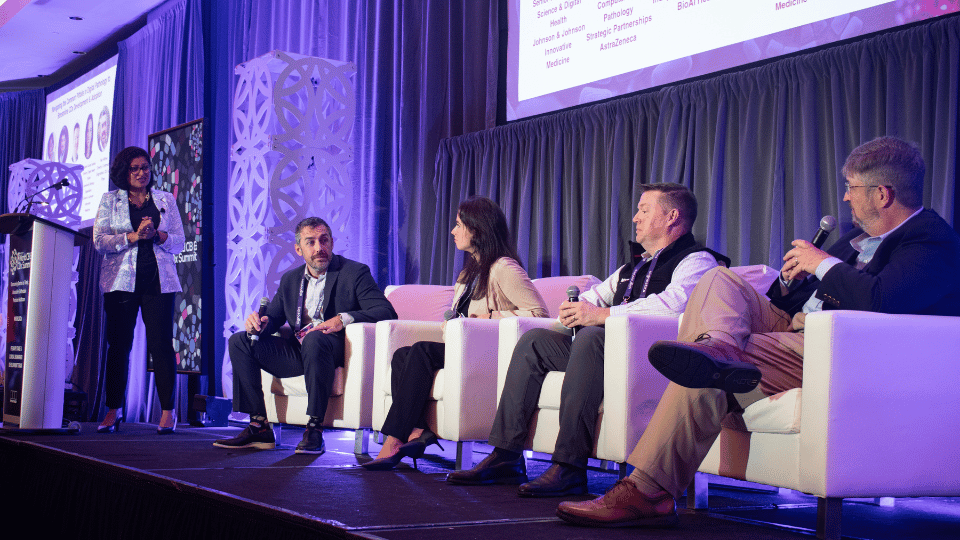
Hear the latest CNS innovations taking place within South Korea while hearing from global experts.
Partner With Us
Position yourself alongside other leading solution providers to ensure your company is the go-to service providers for Korean neuroscience drug developers.
Join Biopharma Experts
Be part of the hottest conversations with like-minded neuroscientists, C-level executives, heads, VPs, and more across discovery, translational and clinical development.